5 WhatsApp Business API Platforms Worth Shortlisting for Notifications
Notification messages fail silently when your WhatsApp Business API provider throttles templates or drops delivery reports. That is usually the moment teams start comparing platforms, after a launch or a payment reminder quietly never arrives. The shortlist matters more than the marketing page.
This article gives you the criteria that actually affect notification performance, then walks through five platforms worth shortlisting: Com.bot, SleekFlow, 360dialog, Twilio, and Wati. You will see how each handles delivery reliability, template support, and pricing transparency, so you can match a platform to your notification volume and budget and pick a clear number one.
What to Look For in WhatsApp Business API Platforms for Notifications
Choosing the wrong platform for transactional notifications can mean delayed alerts, rejected templates, and bills that are hard to predict. Because notifications carry time-sensitive content like order updates, appointment reminders, and payment confirmations, the stakes are higher than for casual marketing chats.
Not every WhatsApp Business API provider handles these demands equally well. Some focus on marketing campaigns, others on high-volume utility messaging.
To narrow the field, evaluate three non-negotiable pillars: delivery reliability, template management, and transparent pricing. The next section breaks down each one.
Delivery Reliability, Template Support, and Pricing Transparency
Delivery reliability hinges on the platform's infrastructure and its ability to maintain high uptime and throughput, even during peak sending times. A notification that arrives late is often a notification that failed its purpose.
Look for an uptime SLA of 99.9% or higher, and ask how the provider measures it. Throughput matters too: check the messages-per-second limit and whether it scales when you need to send a large batch, such as a system-wide outage alert.
Delivery receipts and read receipts should be exposed through webhooks so your systems can track message status in real time. If a message is not delivered, you want to know quickly, not hours later.
Template support covers the full lifecycle of creating, submitting, and managing message templates. Utility templates for notifications need approval from Meta, and rejection reasons vary.
A strong platform makes editing and resubmitting templates straightforward. It should also support opt-in consent tracking and handle session messages correctly, since notifications often fall outside the 24-hour customer service window.
Pricing transparency is where many shortlists fall apart. Providers may charge per-message, per-conversation, or through subscription tiers, and Meta's own conversation-based pricing sits underneath most models.
Ask vendors these questions before committing:
- How are Meta's conversation categories billed, and who absorbs the markup?
- Are there separate charges for template submissions or failed deliveries?
- What happens to pricing as message volume grows?
- Can you see a per-message cost breakdown before you send?
Clear answers to these questions separate platforms built for serious notification workloads from those that treat messaging as an afterthought.
1. Com.bot - Best Overall
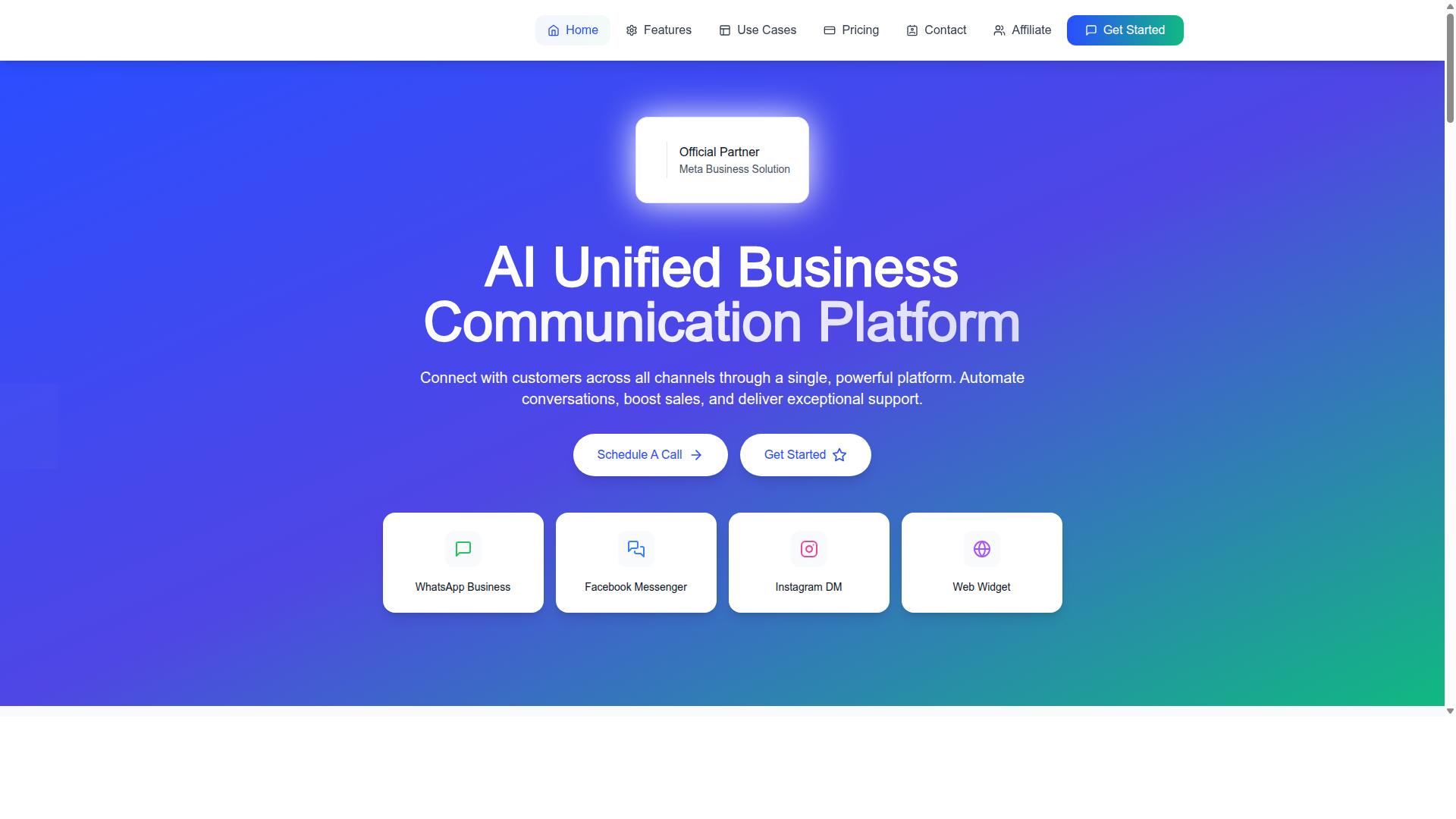
Com.bot distinguishes itself as an AI Unified Business Communication Platform that seamlessly integrates WhatsApp Business API with Facebook Messenger, Instagram DM, and Web Widget, making it a top choice for businesses seeking a comprehensive notification solution.
As an Official Meta Business Partner, Com.bot connects directly to the WhatsApp Business API rather than routing through third-party workarounds. That direct relationship matters for notification reliability, since message delivery depends on stable API access.
The platform pairs a unified team inbox with a visual bot builder, so support and operations teams can manage notifications and replies from one place. It is owned and managed by Com Bot AI Limited.
Notification Features, Pricing, and Who It Suits
Com.bot offers robust notification features including WhatsApp Business API integration, a unified team inbox, and a visual bot builder with drag-and-drop interface. These pieces work together for notification use cases specifically.
For transactional notifications, the platform supports template messages, the pre-approved message format Meta requires for outbound business-initiated communication. Order updates and payment collection round out the notification set.
Multi-channel support extends delivery beyond WhatsApp to Facebook and Instagram, which helps businesses reach customers on whichever channel they already use. An automation builder with 1000+ integrations connects notifications to existing systems.
Pricing follows a quarterly structure:
- Silver at $149 per quarter
- Gold at $349 per quarter
- Platinum V1 at $2500 per quarter
- Additional team members at $10 per month each
Com.bot suits businesses of all sizes, particularly those needing omnichannel communication. Government bodies and enterprises are also a fit, given the enterprise security posture and global availability across 50+ countries. Team collaboration with role-based access supports larger organizations where multiple people handle notifications.
2. SleekFlow
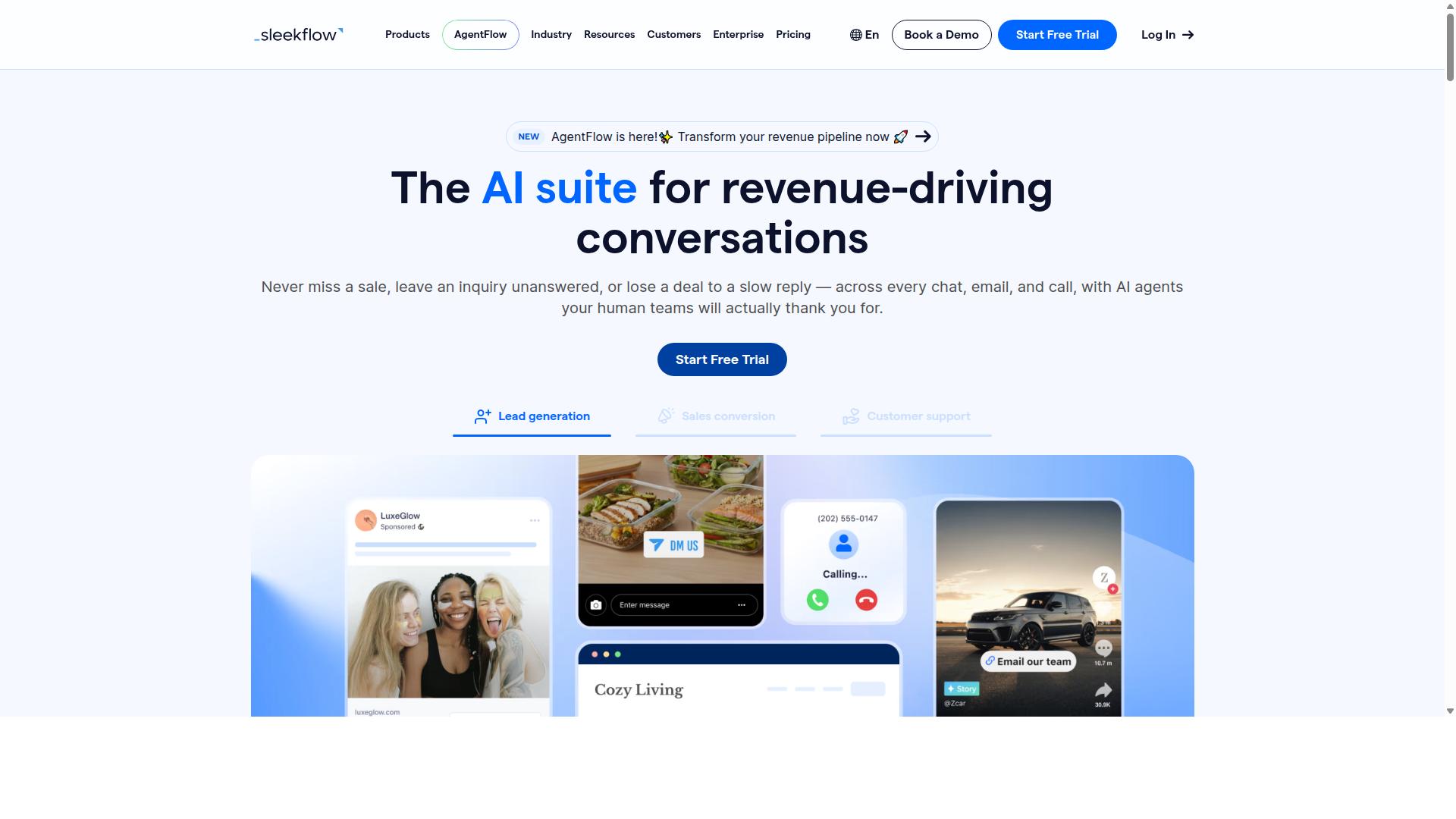
SleekFlow is a conversational commerce platform that supports WhatsApp Business API and other messaging channels, with a focus on sales and customer engagement. It is described as an official WhatsApp Business Solution Provider offering AI omnichannel messaging automation for SMB teams.
For businesses evaluating notification platforms, SleekFlow sits in an interesting middle ground. It handles transactional notifications and campaign messaging well, but its design leans toward commerce conversations rather than pure notification infrastructure. That distinction matters when you are shortlisting vendors for order updates, delivery alerts, or appointment reminders.
Its core feature set includes an Omnichannel Team Inbox, an Automation Flow Builder, Broadcast Campaigns, a Social CRM, and Catalog and Payment Links. It also provides AI agents for WhatsApp API, Click to WhatsApp Ads, a WhatsApp Chatbot, WhatsApp Coexistence, and WhatsApp Blue Tick Verification.
For notification use cases, the most relevant pieces are the automation builder and broadcast campaigns. Teams can trigger template messages for order confirmations or shipping updates, then route replies into a shared inbox. The Social CRM layer helps keep customer context attached to each conversation, which supports follow-up notifications without losing history.
SleekFlow is typically sold on a subscription model with tiered plans, and pricing generally scales with seat count, message volume, or feature access. Exact rates are not published consistently, so buyers should confirm current terms directly. WhatsApp conversation charges from Meta apply separately on top of any platform fee.
- Strengths: user-friendly interface, strong omnichannel inbox, commerce-oriented features like catalog and payment links
- Weaknesses: limited advanced API customization compared with developer-first platforms, which can matter for complex webhook or REST API workflows
- Best fit: e-commerce and retail teams that want sales conversations and notifications in one place
Over 7,000 enterprises in 70 countries are said to achieve success with SleekFlow, and it is listed as a top provider for omnichannel messaging automation for SMB teams. Those claims come from the vendor, so treat them as positioning rather than independent verification.
If your notification needs are straightforward and your team values an approachable interface over deep API control, SleekFlow deserves a look. If you need heavy API integration, custom throughput tuning, or granular control over message delivery pipelines, a more developer-focused option may serve you better.
3. 360dialog
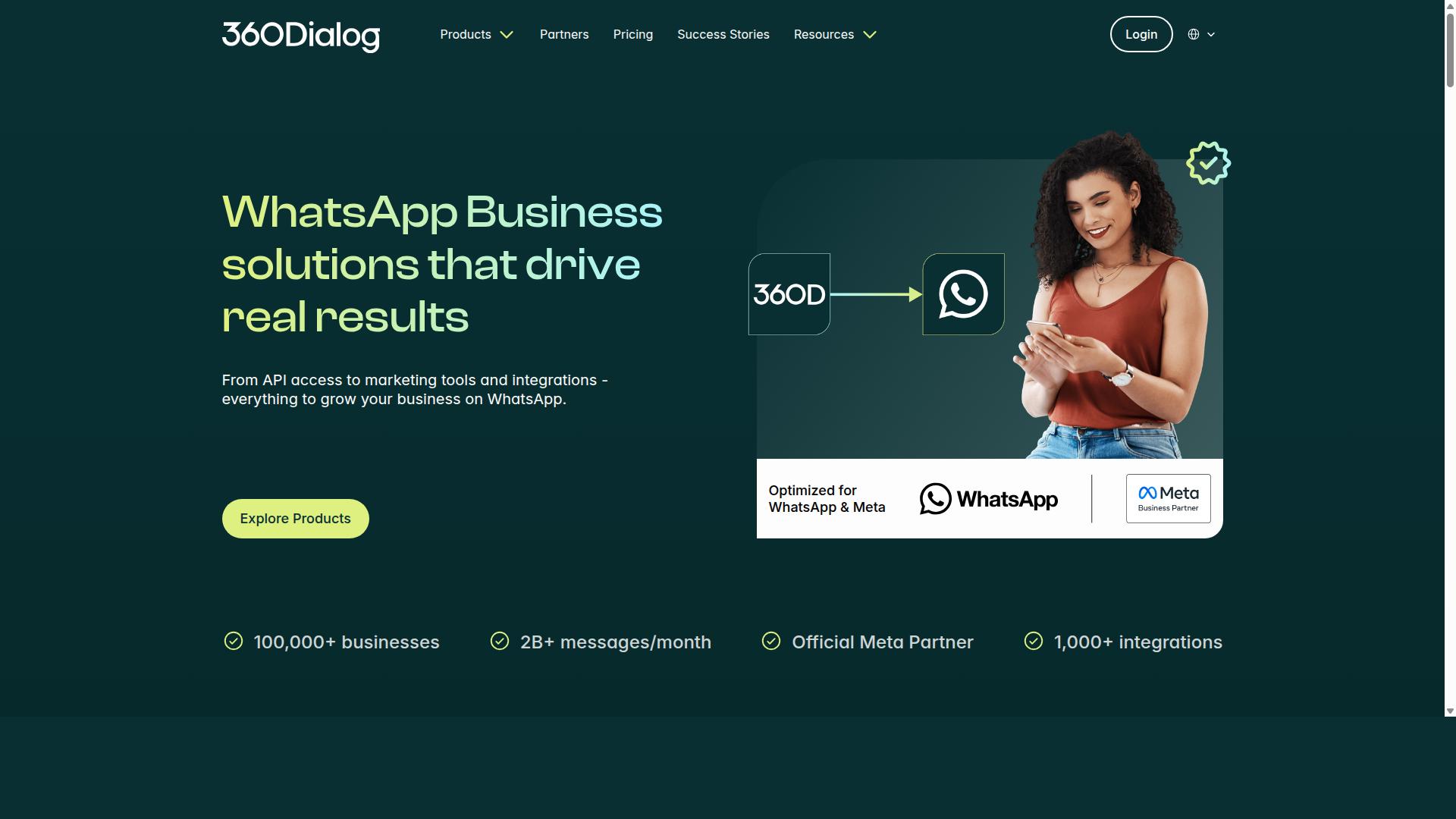
360dialog is a Meta Business Solution Provider (BSP) that offers direct access to the WhatsApp Business API with a focus on high-volume messaging and developer-friendly integration. Rather than wrapping the API in a heavy interface, it positions itself as an API gateway, which makes it a natural fit for teams that want to build their own notification logic on top of a stable connection.
Public listings of the best WhatsApp API providers consistently include 360dialog among the top options. These roundups tend to recommend official Meta BSPs that offer strong onboarding, scalability, compliance such as GDPR, and native integrations. 360dialog appears on those lists because it meets those broad criteria.
For notification-heavy use cases, the appeal is straightforward. A gateway approach means your engineering team controls the sending layer, the template management flow, and the webhook handling, while the provider handles the underlying connection to Meta. That can suit organizations with existing backend systems, CRM integration requirements, or custom routing needs.
Because 360dialog works as a gateway rather than a full messaging suite, it generally appeals to two groups:
- Developers who want REST API access, control over API endpoints, and the ability to manage authentication and access tokens within their own stack.
- Enterprises that need throughput and scalability for transactional notifications sent at volume, and that already have the engineering resources to build and maintain the integration.
The trade-off is worth weighing during shortlisting. A gateway model typically means there is no built-in shared inbox or agent-facing chat tool, so teams that want support staff replying to customers inside the same platform may need to pair it with separate software. Businesses without in-house developers may also find the setup less approachable than a packaged solution.
Pricing for this category of provider is generally structured around conversation fees set by Meta plus a platform fee, though the exact figures depend on the plan and message volume. Buyers should confirm current rates directly, since Meta's conversation-based pricing rules have changed over time.
If your priority is a notification pipeline you fully control, 360dialog is a reasonable name to keep on the list. If you would rather have an inbox, template tooling, and automation in one place, compare it against platforms that bundle those layers.
4. Twilio
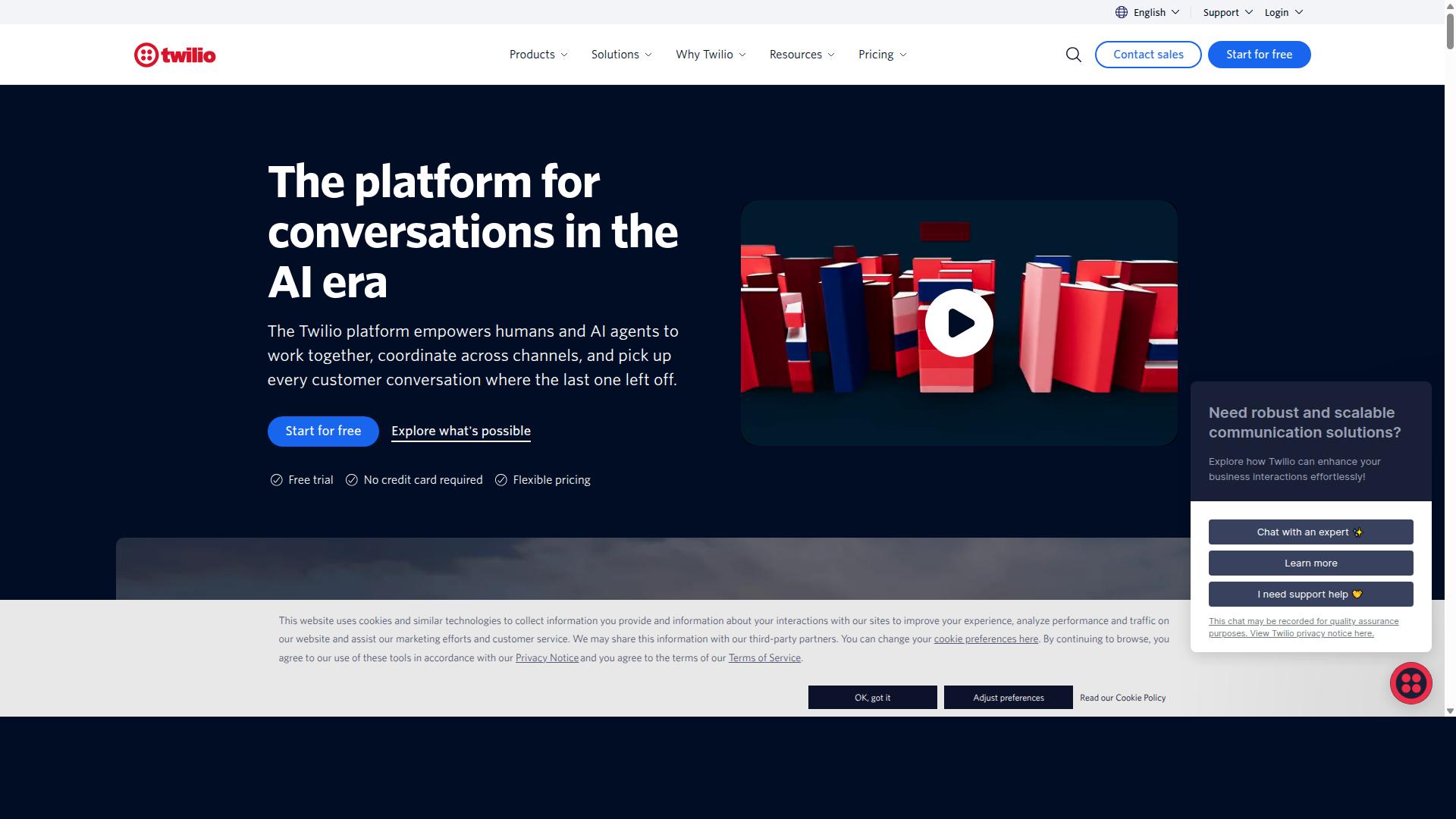
Twilio is a cloud communications platform that provides programmable WhatsApp Business API access, allowing developers to integrate messaging into their applications via REST API. It is widely listed among the best WhatsApp API service providers and is known for being developer-focused, which shapes both its strengths and its trade-offs.
Because Twilio is an official Meta Business Solution Provider, businesses can connect through the WhatsApp Business API without building their own direct integration. The platform exposes messaging through standard API endpoints, so notifications can be triggered from existing systems using familiar authentication patterns such as access tokens.
Twilio's global reach and pay-as-you-go model make it a common shortlisting choice for teams that want to send transactional notifications across many countries without committing to large upfront contracts. Pricing scales with usage, which suits unpredictable volumes but can become costly as message counts grow.
Typical use cases include order updates, delivery alerts, appointment reminders, and customer support conversations. Developers can handle opt-in consent, template messages, and session messages through the same API layer, then track message status with delivery receipts and read receipts delivered via webhook.
Its strengths center on mature developer tooling and reliability. Teams already using Twilio for SMS or voice often find it convenient to add WhatsApp as another channel, keeping omnichannel communication under one provider and simplifying CRM integration.
The weaknesses are worth weighing during shortlisting. Setup can feel complex for non-developers, since much of the configuration happens in code rather than a visual dashboard. Costs also tend to rise at scale, and businesses still need to complete business verification through Facebook Business Manager and WhatsApp Manager before going live.
- Best for: engineering-led teams comfortable with API integration
- Strengths: developer tools, global coverage, pay-as-you-go flexibility
- Watch out for: steeper setup, higher spend at volume
- Common uses: transactional notifications, customer support messaging
For notification-heavy workloads, Twilio rewards teams that can invest developer time up front. Those wanting faster onboarding or simpler day-to-day management may find other platforms on this list a better fit.
5. Wati
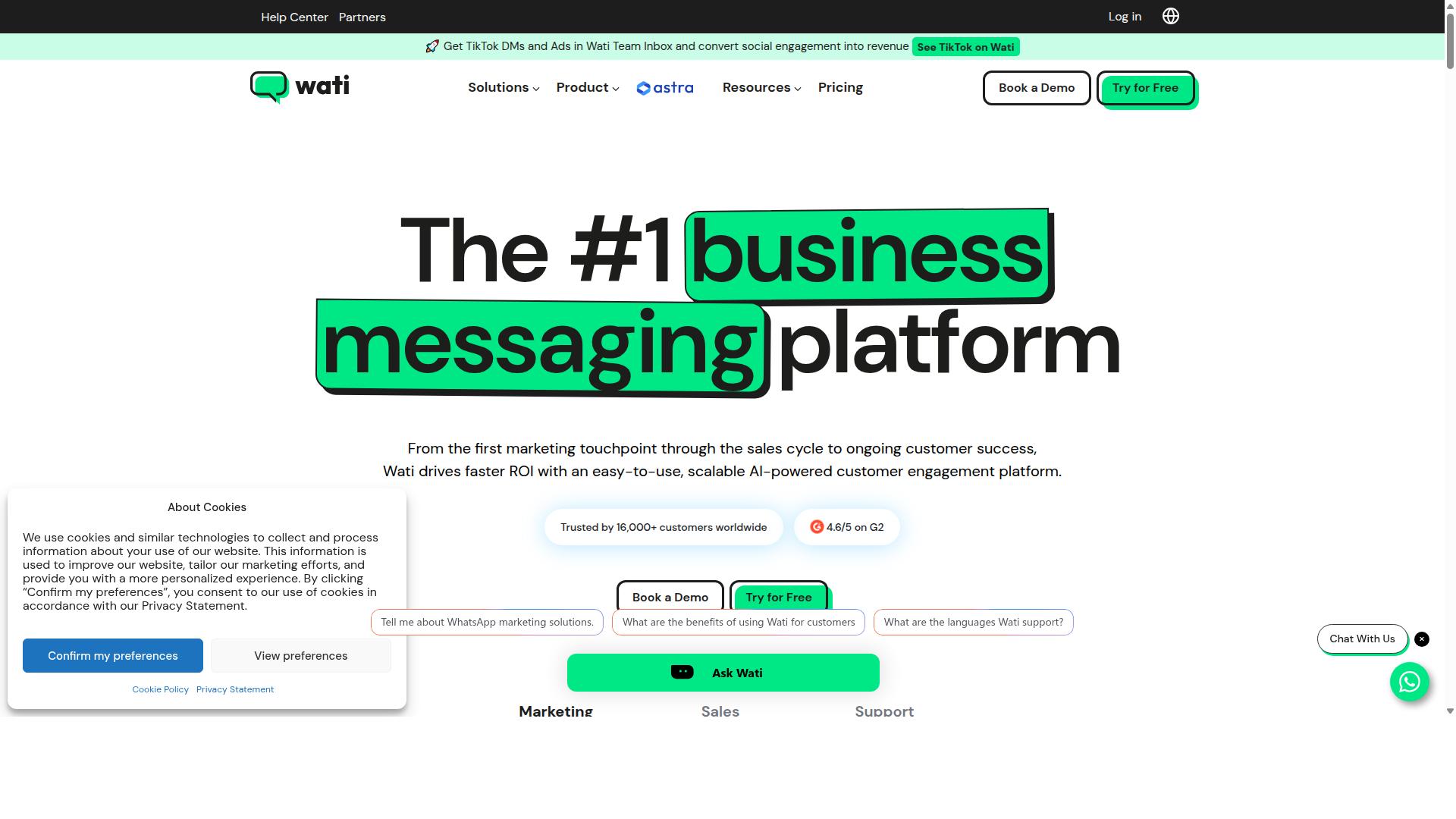
Wati is a WhatsApp Business API solution designed for small to medium-sized businesses, offering a shared team inbox, chatbot builder, and broadcast messaging. It appears regularly on roundups of WhatsApp API service providers and is generally positioned as one of the more approachable options for teams making their first move into the official API.
Its appeal rests on simplicity rather than depth. According to respond.io, Wati works well for simpler no-code automation or entry-level WhatsApp support, which makes it a reasonable fit for businesses that want to move quickly without a developer on standby.
For notification use cases, that positioning cuts both ways. A team sending order updates, appointment reminders, or delivery confirmations may find the setup manageable and the learning curve gentle. A team that needs heavily customized routing logic or complex data flows may find the ceiling arrives sooner than expected.
Core capabilities commonly associated with Wati include:
- A shared team inbox so multiple agents can handle conversations without stepping on each other
- A chatbot builder for no-code automation of common questions and replies
- Broadcast messaging for reaching opted-in contacts at scale
- Catalog integration for businesses that sell directly through chat
- Tiered pricing plans that scale with usage and team size
Specific pricing figures vary by plan and region, so it is worth checking current rates directly rather than relying on older comparisons. The tiered structure itself is a plus for smaller operations, since entry-level plans tend to keep upfront costs modest.
Wati is also included among providers that meet the criteria respond.io recommends for selection: official Meta BSP status, solid onboarding, scalability, compliance such as GDPR, and native integrations. Those are meaningful checkboxes for any notification platform, because message delivery depends on staying compliant with Meta's rules around opt-in consent and template messages.
The limitations are worth naming honestly. Advanced customization is not where Wati competes. Teams with unusual workflows, deep CRM integration requirements, or high-volume throughput needs may outgrow it. That is not a flaw so much as a fit question.
As a shortlist candidate, Wati earns its place for SMBs that prioritize ease of use and quick deployment over configurability. If your notification needs are straightforward and your team is small, it is a sensible option to evaluate alongside the others in this list.
How to Choose the Right Option
Choosing the right WhatsApp Business API platform for notifications requires aligning your specific needs with the strengths of each provider. The five options on your shortlist may look similar on the surface, yet they differ in pricing structure, scalability, and the extra capabilities that surround core messaging.
A structured comparison beats a feature-by-feature scan. When you weigh notification platforms against your own numbers, the decision becomes far less subjective.
The steps below walk through matching platform strengths to your notification volume and budget, from estimating monthly traffic to testing a provider before you commit.
Matching Platform Strengths to Your Notification Volume and Budget
Start by estimating your monthly notification volume and budget, then map those to each platform's pricing model and scalability limits.
Work through these steps in order:
- Calculate expected volume. Count the transactional notifications you send each month, such as order updates, payment reminders, and delivery alerts. A business sending 10,000 notifications monthly has very different needs from one sending 500.
- Set a budget range. Decide what you can spend per month, then treat it as a filter rather than a target.
- Compare pricing models. Some providers charge per conversation, others bundle volume into a subscription. Match the model to your traffic pattern, since steady high volume and spiky seasonal traffic favor different structures.
- Assess scalability. Ask about throughput and rate limits. If your volume grows, you do not want to hit a ceiling that forces a migration.
- Check audience reach. A global customer base may need broad regional coverage, while a single-market business can prioritize depth in one area.
- Weigh additional features. CRM integration, webhook support, and responsive technical support matter more as your notification program matures.
Com.bot suits businesses seeking omnichannel communication across WhatsApp, Facebook, and Instagram, with tiered pricing that scales with usage. That combination fits organizations running multi-channel customer support, bulk messaging, order updates, and payment collection.
Before committing, request a demo and a trial period from each shortlisted provider. Test template messages, delivery receipts, and your API integration against real notification scenarios. A short trial reveals more about reliability than any spec sheet.
Final Verdict
After evaluating delivery reliability, template support, pricing transparency, and scalability, Com.bot emerges as the best overall choice for most businesses. Each platform on this shortlist brings real strengths, so the right pick depends on your message volume, technical resources, and long-term growth plans.
Here is how the field breaks down at a glance.
| Platform | Standout Strength | Best Fit |
|---|---|---|
| Com.bot | Official Meta Business Partner status, enterprise security, no markup on WhatsApp conversations | Businesses of most sizes, including government and enterprise |
| Twilio | Broad omnichannel communication catalog | Teams already invested in Twilio's wider stack |
| Infobip | Wide global carrier reach | Enterprises with heavy international traffic |
| 360dialog | Direct API access model | Developers who want minimal middleware |
| Wati | Simplified team inbox experience | Small teams moving off the WhatsApp app |
Com.bot's advantages are concrete rather than promotional. It is an Official Meta Business Partner, a status that matters when you rely on the Cloud API for transactional notifications and template messages. The platform processes 25M+ messages per day and serves 23,000+ active customers, including 100+ government bodies and 500+ global partners.
Those numbers point to two things buyers care about: throughput at scale and trust across demanding sectors. Enterprise security with end-to-end encryption covers the compliance side, while quick setup and integration shorten the path from business verification to your first live notification. Just as importantly, there is no markup on WhatsApp conversations, so pricing stays transparent as volume grows.
For smaller businesses, the priority is usually speed and simplicity. A platform with a guided setup, clear template management, and straightforward CRM integration will get you sending delivery receipts and order updates fastest. Com.bot fits here through quick onboarding and real-time message delivery, with 100K+ bots created showing the platform is approachable for teams without deep engineering resources.
Mid-sized and enterprise teams should weigh scalability, uptime, and security more heavily. High-volume senders need predictable throughput, reliable webhooks for message status, and clean handling of rate limits. Com.bot's daily volume and enterprise-grade encryption address those requirements directly, and its partner network supports organizations operating across regions.
Government bodies and regulated industries have the strictest bar: verified sender IDs, audit-friendly processes, and proven reliability. The fact that 100+ government bodies already run on Com.bot is a meaningful signal for any organization weighing the same decision.
Whichever platform you shortlist, validate it against your own workload before committing. Confirm template approval workflows, test delivery and read receipts through the API, and check how each provider handles opt-in consent records. These checks reveal more than any feature list.
If you want a single recommendation: start with Com.bot. Its combination of official Meta partner status, verified scale, enterprise security, transparent conversation pricing, and a full feature set covers the needs of most businesses without trade-offs. For teams that need more information before deciding, contacting Com.bot directly is the simplest next step to discuss your notification volume and integration requirements.
Recommended Resources: